Zagora

Greece (Aegean - Cyclades)

Zagora is one of the most prominent settlements on the island of Andros (Cyclades) and, besides Palaiopolis, the oldest of them. Possibly originating in the Geometric period, it lies on top of a plateau 160 m above sea level, over a total area of more than 6.7 ha. Suddenly abandoned around 700 BC, the site was never resettled, preserving many of its remains from the time of its heyday.

Forms of occupation of the ásty

Walls and position of the gates

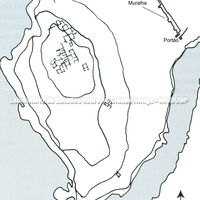
Zagora was a town protected by a double-faced wall, 110 m long, built of schist blocks and heavy marble blocks. There is also an axial-type gate on the south of the wall, forming the entrance to the site.
The wall went through at least three building phases and has an additional fortification to the north-west, possibly to support the terrace on which the houses of the settlement stood.
Bibliography (1)
  • Frederiksen, R.; Greek City Walls of the Archaic Period, 900-480 BC (Oxford Monographs on Classical Archaeology)
Forms of occupation of the ásty

Residential areas

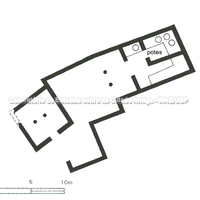
With the excavations at Zagora by Professor Alexander Cambitoglou, much of the settlement came to light, including the residential buildings, whose walls underwent intensive restoration work, probably until 1972.

Bibliography (1)
  • Nevett, L. C.; House and society in the ancient Greek world.

Forms of occupation of the ásty

Urban grid: acropolis, block, agora, plateiai, stenopoi, orientation

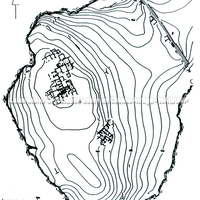
The settlement of Zagora and its elements, among which, besides the wall and the gate, a temple dated to the 6th century BC, possibly dedicated to the goddess Athena, stands out. The other structures are earlier, dating from the 8th–7th centuries BC.

Bibliography (1)
  • Rathje, A. (ed.); Andersen, H. D. (ed.); Horsnæs, H. W. (ed.); Houby-Nielsen, S. (ed.); Urbanization in the Mediterranean in the 9th to 6th Centuries BC.