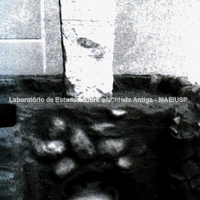
The model shows a section cut through the thickness of the stratigraphic layers of the sanctuary. Urns containing ashes and bones, topped by a cippus or a votive stele with representations consecrating Tanit and Baal-Hammon, are constantly found. As a sacred place it functioned throughout the Punic period of Carthage. The tophet site was continuously occupied. As the excavations progressed, three superimposed layers of occupation were found, the oldest being the deepest. Specialists have named these layers: Tanit I, the oldest, dated from the 8th to the 7th century BC; Tanit II, dated from the 6th to the 4th century BC; Tanit III, dated from the 3rd century to the first half of the 2nd century BC.
Full-size image restricted
Nausitoo images are intended exclusively for academic research and teaching. To view them at full size, register and accept the Terms of Use, or sign in.