Klazomenai

Asia Minor (Ionia)

Klazomenai was initially established on the mainland but controlled three nearby islands – Drymoussa, Pele and Marathoussa – from the 7th century BC, when the city was moved from the mainland to a nearby island because of its vulnerability to attack during the Archaic period. Archaeology confirms that the site identified as the urban centre of Klazomenai during part of the Archaic period was abandoned in the 6th century BC. In 430 BC the city was conquered by the Persians.

Forms of occupation of the ásty

Work areas: workshops

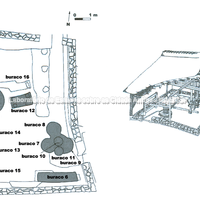
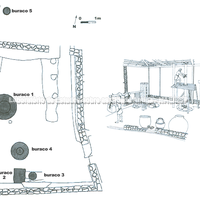
These illustrations show two distinct phases of the press, both dated between the mid-6th century and 530 BC, when the city was destroyed by the Persians. The installation consisted of a courtyard along which 15 holes were cut into the bedrock. The space was apparently specialised and complete, with areas for crushing, pressing and separating olive oil, which could also be used for grapes or other products. A reconstruction of the press was made on site in 2002 and has been in operation there since 2004.
Bibliography (1)
  • Foxhall, L.; Olive Cultivation in Ancient Greece: Seeking the Ancient Economy.
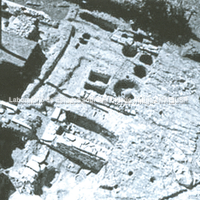
The presses commonly used in cities and settlements in Greece were intended for processing oil from olive trees in the city itself or its surroundings, but occasionally they could also be used for other purposes. At Klazomenai the only example of a press dating from the Archaic period was found. The press lay in the western part of the city.

Bibliography (1)
  • Foxhall, L.; Olive Cultivation in Ancient Greece: Seeking the Ancient Economy.

Those responsible for the excavation and reconstruction state that the oldest rotary press was found at this site, located in hole 1 shown in the image. The question, however, is controversial, since other scholars believe that hole 1 was too wide for the rotary press and that it more probably served as a settling tank.

Bibliography (1)
  • Foxhall, L.; Olive Cultivation in Ancient Greece: Seeking the Ancient Economy.