Samos

Asia Minor (Ionia)

"Samos belonged to the Ionian dodekapolis, and the people of Samos took part in the Ionian Revolt in 499, providing sixty triremes at the battle of Lade in 494 (...). The urban centre of Samos remained fortified until the Athenians forced the Samians to demolish their walls in 439/8. Samos remained ateichistos (an unfortified city without walls) until 411, when the Athenians had to fortify the city in haste to prevent an attack by Peloponnesian forces" (Hansen; Nielsen, 2004: 1097).

Forms of occupation of the khóra

Sacred areas: deposits, temples, shrines, sanctuaries, altars

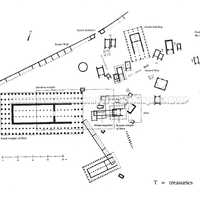
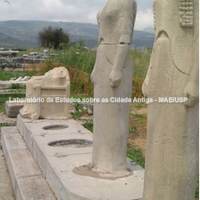
The dominant element of the Samian khóra is the Heraion. This sanctuary is described by Herodotus as:
"a sanctuary greater than all the sanctuaries we have seen, the first of whose architects was Rhoikos son of Phileas, a native of the island." (Herodotus, III, 60).
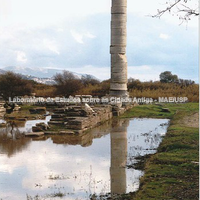
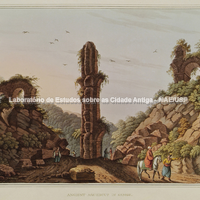
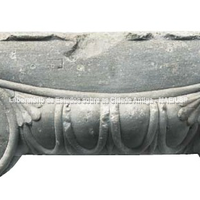
The Temple of Hera, the main element of the sanctuary, underwent a series of alterations. Its earliest record dates from the late Mycenaean period, but it was during the rule of Polycrates, tyrant of the island from 532 to 522 BC, that the temple reached historic proportions, with 155 columns (24 x 9).
Bibliography (1)
  • Kyrieleis, H.; The Heraion at Samos
Forms of occupation of the khóra

Water management: channels, cisterns, wells.

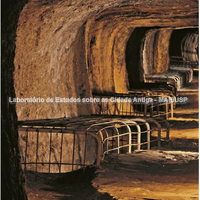
Besides the prominence given by Herodotus to the Temple of Hera, another construction is recalled by the author as a memorable work: the Tunnel of Eupalinos, which served as an aqueduct. This tunnel is more than a kilometre long and is significant as the longest tunnel of its time. Besides making access to water easier, the aqueduct could also be used in wartime, since being underground made it difficult to detect and therefore defensible.

Bibliography (1)
  • Kyrieleis, H.; The Heraion at Samos
During the excavations at the Heraion, some of the areas richest in organic material were the wells. In one of the excavations three wells were found. They were full of animal remains, probably used as offerings, and of objects, especially pottery, which were probably also brought to the sanctuary as offerings.

Bibliography (1)
  • Kyrieleis, H.; The Heraion at Samos
Relationship between ásty and khóra

Roads, streets, gates in the walls

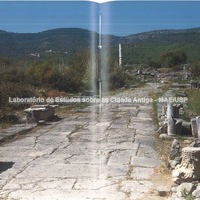
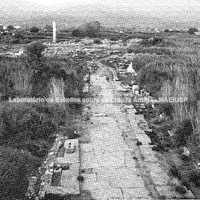
As a means of access from the ásty to the Heraion, Samos had a Sacred Way which was extended in the 6th century to a length of 6 kilometres, a monumental measure. Along the Way many objects have been found, probably placed there as offerings.

Bibliography (1)
  • Diniz, S.; Os Santuários de Hera enquanto elementos do espaço políade,