Naxos

Greece (Aegean - Cyclades)

The largest of the Cyclades, Naxos was the cultural and commercial centre of the archipelago during the Archaic and Classical periods. Occupied first by Thracians and then by Carians, Naxos had inhabitants living both in the ásty and in komai (outlying villages) already in the Archaic period; the famous marble quarries were opened in the mid-7th century BC and operated for a long time thereafter. Its main deity is Dionysus, because of Naxian wine, and myth says that it was there that the god married Ariadne, abandoned by Theseus after the flight from Crete.

Museum

Archaeological object

Various sculptures, objects and stelae, held in museums outside Naxos, in the Cyclades, but recovered on site, with clear references to the city and the island in their inscriptions.

Bibliography (1)
  • Boardman, J.; Greek Sculpture: The Archaic Period.
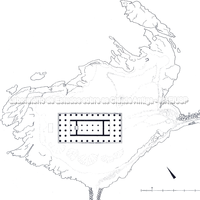
Forms of occupation of the ásty

Relationship and connections between the urban grid and the harbour

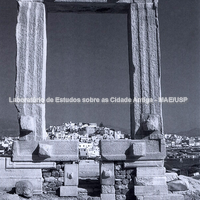
On arriving at the harbour of Naxos, in the Cyclades, the doorway of a temple probably dedicated to the god Apollo stands out on the horizon, showing the connection between harbours and public and/or sacred buildings. Such elements show the urban fabric as an organism of interrelated parts.

Bibliography (2)
  • Hellmann, M.; L’ Architecture Grecque. 2. Architecture religieuse et funéraire.
  • Spawforth, T.; The Complete Greek Temples.

Forms of occupation of the khóra

Sacred areas: deposits, temples, shrines, sanctuaries, altars

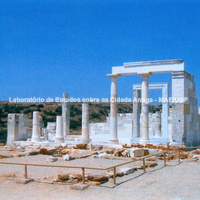
Sanctuaries of Demeter and Dionysus, whose activities were important in antiquity for the places furthest from the urban area of Naxos. Near villages, they indicate the settlement of this more distant area through the ruins and the large number of votive objects found (in the case of Dionysus), and through the presence of various elements that made it possible to restore the ancient form of the temple (in the case of Demeter).

Bibliography (2)
  • Hellmann, M.; L’ Architecture Grecque. 1. Les principes de la construction.
  • Hellmann, M.; L’ Architecture Grecque. 2. Architecture religieuse et funéraire.