Melia

Asia Minor (Ionia)

Karion lay on Mt. Mykale, in a territory disputed between Samos and Priene throughout the Hellenistic period. Kleiner et al. (1967) argue that the fortress was built on top of the remains of Melia, whose fortifications were strengthened and extended at the end of the 7th century BC. There is archaeological evidence of continuous activity on the mountain throughout the Archaic, Classical and Hellenistic periods, but according to Kleiner the site was occupied only intermittently as a garrison. (Hansen, 2004:1060) According to Kleiner et al., Melia is identified with a place called Kaletepe, on Mount Mykale. On the northern part of this mountain there was an important Ionian sanctuary of Poseidon Helikonios, the Panionion. Melia is considered basically a phroúrion, because of the presence of a Hellenistic fortress. Since it lay in an area colonised by Carians and Ionians, who founded several colonies around the river Maeander, in the literary tradition it appears as the object of disputes between these two peoples already in the Archaic period. Vitruvius (Arch. IV, 1, 4), who narrated the Melian War and the foundation of the Ionian League – milestones in the formation of Ionian identity – states that Melia was originally Ionian, but because of the arrogance of its inhabitants was destroyed by the Ionians themselves. Hecataeus (Gen., FGrHist 1 F11), however, attributes a Carian origin to this place. Theopompus (FGrHist 115 F103), a historian of the 4th century BC, states that Melia was an Ionian city founded by the descendants of the inhabitants of Kolophon.

Relationship between ásty and khóra

Structures between ásty and khóra: walls, necropoleis, sanctuaries.

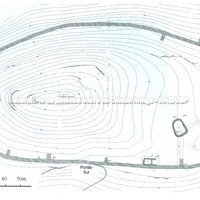
General plans of the site and of its walls.

Bibliography (1)
  • Frederiksen, R.; Greek City Walls of the Archaic Period, 900-480 BC (Oxford Monographs on Classical Archaeology)