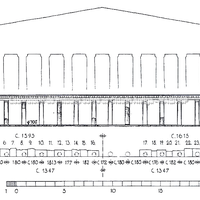
Map with temples and places in Arcadia.
Bibliography (1)
- Roy, J. (ed.); Nielsen, T. H. (ed.); Defining Ancient Arkadia: Symposium, April, 1-4 1998
Greece (Arcadia)
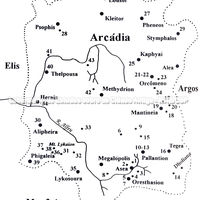
Megalopolis was a creation of the Arcadian League in the mid-4th century BC, through a synoecism of several settlements in the Peloponnese. This new polis was supposed to be the capital of the League. The number of settlements varies according to the ancient sources, but in any case Tegea, Mantinea, Kleitor, Mainalia and Parrhasia took part in this synoecism. These poleis are said to have come together in order to withstand Spartan pressure.
If the territory had been made up of all the communities listed in Paus. 8.27.3-4, it would have covered 1,500 km². However, if Moggi's reconstruction based on Diodorus is preferred, the territory would have covered about 400 km², somewhat larger than that of Tegea but smaller than that of Kleitor. (cf. Hansen, 2004: 521)
The material remains of the polis include a bouleuterion, a stoa, an agora with the temple dedicated to Zeus Soter, a theatre with seating for 20,000 people, and walls. Most date from the time of the foundation in the mid-4th century BC.
Archaeological surface survey indicates that, even though the inhabitants who took part in the synoecism settled in the ásty, there are many traces of habitation in the rural area, both in scattered farmsteads and in nucleated settlements.
Borders
Map with temples and places in Arcadia.
Forms of occupation of the ásty
The central area of this polis has been excavated, revealing several public structures.
 Theatre. North wall of the skene.
 Hellenistic proscenium, foundation, 2002.
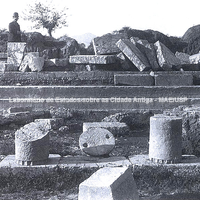 Hellenistic proscenium seen from the south.
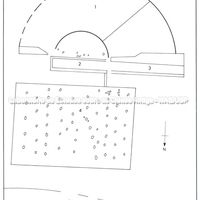 Plan of the theatre area.
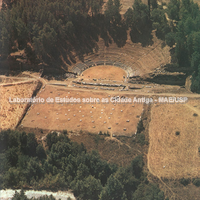 Aerial view of the theatre area.
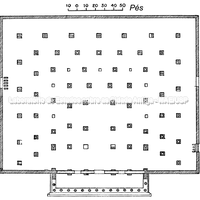 Thersilion, Megalopolis.
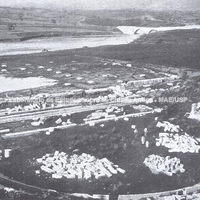 Theatre and Thersilion. Of the Thersilion, the foundations and little more survive; the…
Building techniques
Architectural details
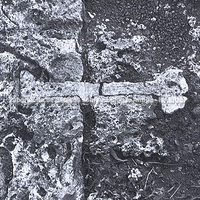 Thersilion. Double T-shaped iron clamps found in a row of supporting columns. Mid-4th…
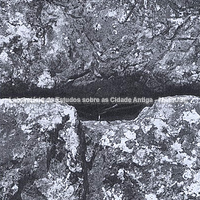 Thersilion. Holes left by the double T-shaped clamps at the entrance of the euthynteria…
 Theatre. Access to the diazoma halfway along the skene.
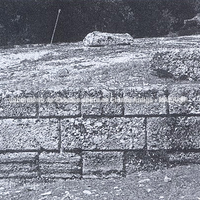 Sanctuary of Zeus Soter. Base of the façade next to the propylon.
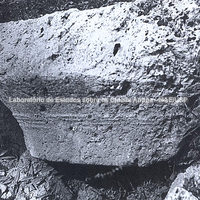 Thersilion. Doric capital from the entrance.
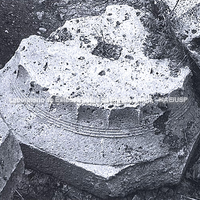 Thersilion. Doric capital from the entrance.
 Old bouleuterion. Doric capital.
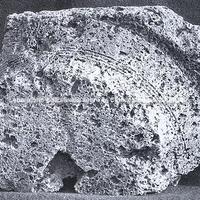 Old bouleuterion. Doric capital.
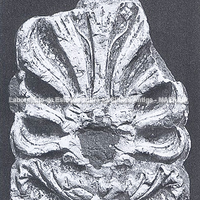 Antefix from the Thersilion. Tripoli. Archaeological museum inventory 3383.
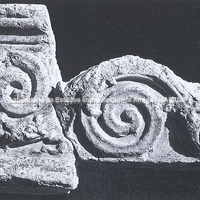 Sima of the stoa of Aristodamos (?).
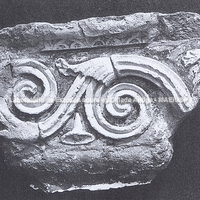 Sima of the Thersilion (?). Tripolis.
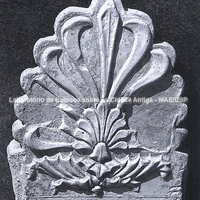 Antefix TK 217 from the old bouleuterion.
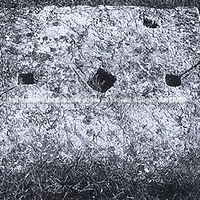 Thersilion. Support hole for column d 7.
 Hellenistic proscenium. Base of a pier.
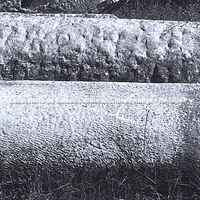 Hellenistic proscenium, piers.
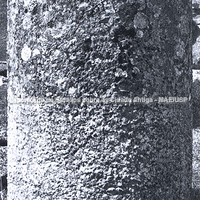 Thersilion. Bottom drum of column 2 in situ.
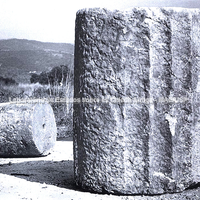 Stoa of Aristodamos. Column drum number 67 from the reconstruction of the hall under…
Reconstructions
Reconstructions
Relationship between ásty and khóra
Several roads suitable for wheeled vehicles have been found linking the various settlements that formed part of Megalopolis.
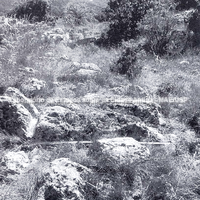 The wheel-road (Megalopolis) Peraitheis–Mainalion Pedion (no. 26) at Κουμασορρεμα.
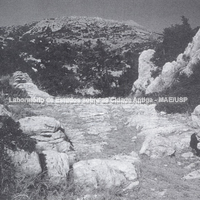 The wheel-road Megalopolis/Basilis–Lykaion (no. 43); the artificial passage between…