Herakleia Minoa

Sicily (West Coast)

Herakleia Minoa is an apoikia founded by Selinous during the 6th century BC, on the south coast of Sicily between Selinous and Akragas, near the river Platani. Founded to mark Selinuntine territorial sovereignty in the face of the expansion of Akragas, it suffered a setback. The city ended up living within the sphere of influence of Akragas at least until 409 BC, when it was subjugated by the Carthaginians. The archaeological remains date from the 4th century BC onwards. The regular plan of Herakleia Minoa dates from the time of Timoleon's expedition to Sicily, in the middle of that century, more precisely in 338 BC, when the treaty between Timoleon and the Carthaginians brought the city back into the Greek sphere.

Forms of occupation of the ásty

Residential areas

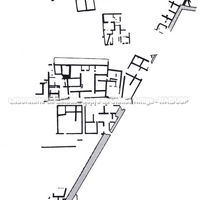
Plans of the houses of Herakleia Minoa; 4th century BC.

Bibliography (1)
  • Bollati, R.; Bollati, S.; Siracusa: genesi di una città. Tessuto urbano di Ortigia.
Forms of occupation of the khóra

Road systems: remains, orientation.

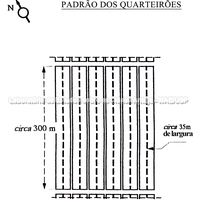
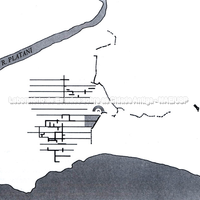
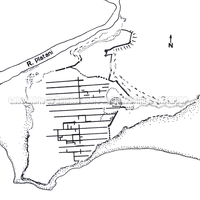
Plans of the settlement in which we can see the orientation of the street system. The city's street grid ran east–west with blocks 35 m wide. In these, the houses had inner courtyards around which the rooms were arranged. In later times the houses became smaller, with smaller rooms too. The excavated stretches of the walls are also visible on the plans

Bibliography (4)
  • Mistretta, G.; Eraclea Minoa frontiera di civiltå.
  • Carratelli, G. P.; Sikanie: Storia e civiltà della Sicilia greca.
  • Bollati, R.; Bollati, S.; Siracusa: genesi di una città. Tessuto urbano di Ortigia.
  • Longo, F.; Jannelli, L.; Cerchiai, L.; The Greek Cities of Magna Graecia and Sicily.

Forms of occupation of the ásty

Urban grid: acropolis, block, agora, plateiai, stenopoi, orientation

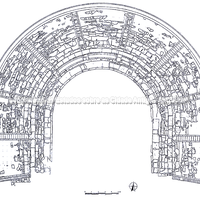
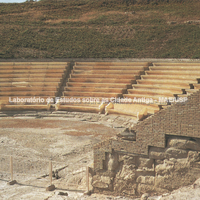
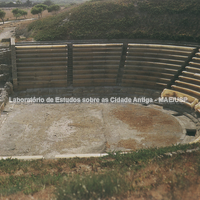
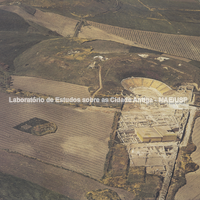
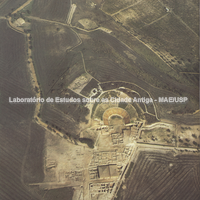
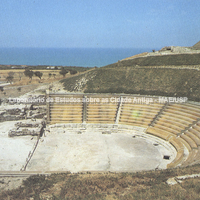
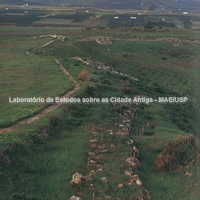
Here we see plans and aerial images of the ásty, highlighting the area of the theatre and the surrounding buildings, as well as a diagram of the layout of the streets in a block. Today the theatre is the most prominent building of the ancient Greek city.

Bibliography (3)
  • Mistretta, G.; Eraclea Minoa frontiera di civiltå.
  • Carratelli, G. P.; Sikanie: Storia e civiltà della Sicilia greca.
  • Bollati, R.; Bollati, S.; Siracusa: genesi di una città. Tessuto urbano di Ortigia.

Forms of occupation of the khóra

Position in relation to the walled area

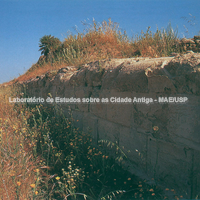
The inhabited area of the city was surrounded by a fortified wall adapted to the terrain. Several stretches of this wall have been discovered, with dates ranging from the 6th to the end of the 4th century BC. The oldest stretches of the wall resulted from an aggressive territorial dispute between Selinous and Akragas.

Bibliography (1)
  • Mistretta, G.; Eraclea Minoa frontiera di civiltå.

Building techniques

Architectural details

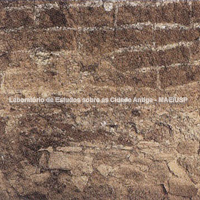
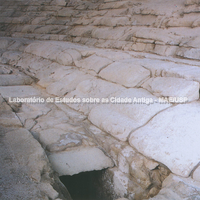
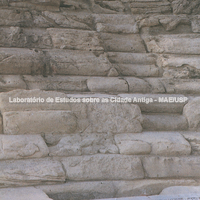
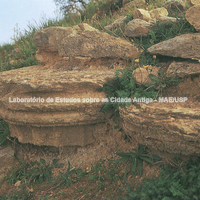
Here we see images of construction details of different buildings: the theatre, the houses and the sanctuary.

Bibliography (2)
  • Mertens, D.; Città e monumenti dei Greci d’Occidente.
  • Mistretta, G.; Eraclea Minoa frontiera di civiltå.

Forms of occupation of the ásty

Sacred areas: deposits, temples, shrines, sanctuaries, altars

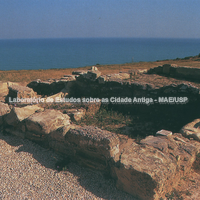
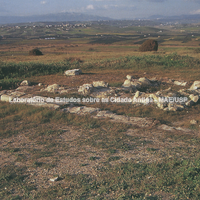
Remains of the Hellenistic sanctuary.

Bibliography (1)
  • Mistretta, G.; Eraclea Minoa frontiera di civiltå.