Amathus

Cyprus (Cyprus)

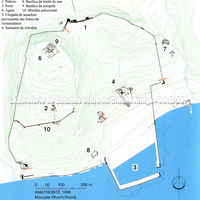
A city on the island of Cyprus, which in the 8th and 7th centuries was divided into kingdoms, Amathus being the capital of one of them. It was an important port of call for traders from the eastern Mediterranean as well as a cosmopolitan centre frequented by Greeks, Phoenicians, Jews and Egyptians. Amathus lay between the sea and a mountain range called Troodos. Traces of occupation dating from the Neolithic period (7000–4000 BC) have been found. Many remains of historical times have been identified, such as necropoleis with monumental tombs and stone doors. It is difficult to establish all the boundaries of the territory, mainly because of modern construction.

Forms of occupation of the khóra

Residential areas: villages, farmsteads

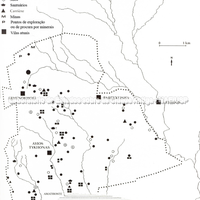
Thirty-nine rural properties have been identified, mainly thanks to pottery and amphorae. The oldest establishments arose between the 10th and 8th centuries BC, that is, at the same time as the establishment of the city itself. Two of them were abandoned in the Classical or Hellenistic period, and the others were reoccupied at different times, but especially between the 7th and 5th centuries BC. Five are Archaic and seven Classical. However, it is in the Hellenistic period that occupation of the khóra intensified, with 17 sites already established remaining active and another 10 being created. This changed in the Roman period, when stagnation set in.
Bibliography (1)
  • AA.VV.,; L`espace grec. 150 ans de fouilles de l’École française d`Athènes.
Reconstructions

Reconstructions

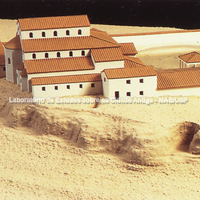
Amathus was a Greek polis occupied from before the Greek settlement until the Christian period, through the Roman period. This may be explained by its very strategic geographical position on the island of Cyprus.

Bibliography (1)
  • AA.VV.,; L`espace grec. 150 ans de fouilles de l’École française d`Athènes.

Borders

Markers: horoi, phrouria, sanctuaries, harbours.

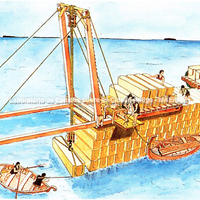
Reconstruction of a machine for building a pier (Hellenistic period)

Forms of occupation of the ásty

Sacred areas: deposits, temples, shrines, sanctuaries, altars

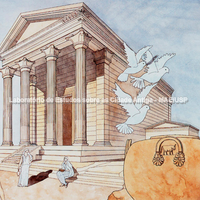
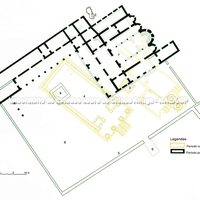
The sanctuary of Aphrodite was built over older remains of the cult of a mother goddess. It was in use at Amathus until the 2nd century BC, when it was associated with the cults of Isis and Sarapis. Later, in the 4th century AD, together with the whole city, this area became a space for Christian worship.

Bibliography (1)
  • AA.VV.,; L`espace grec. 150 ans de fouilles de l’École française d`Athènes.
Forms of occupation of the ásty

Urban grid: acropolis, block, agora, plateiai, stenopoi, orientation

The urban area was built up over a long time. 950 years passed between the construction of the first necropoleis and an embryonic wall around the acropolis and the first signs of real and consistent urban occupation, and another 200 years before the city reached its peak.

Bibliography (1)
  • AA.VV.,; L`espace grec. 150 ans de fouilles de l’École française d`Athènes.
migration

images from the old database

/